


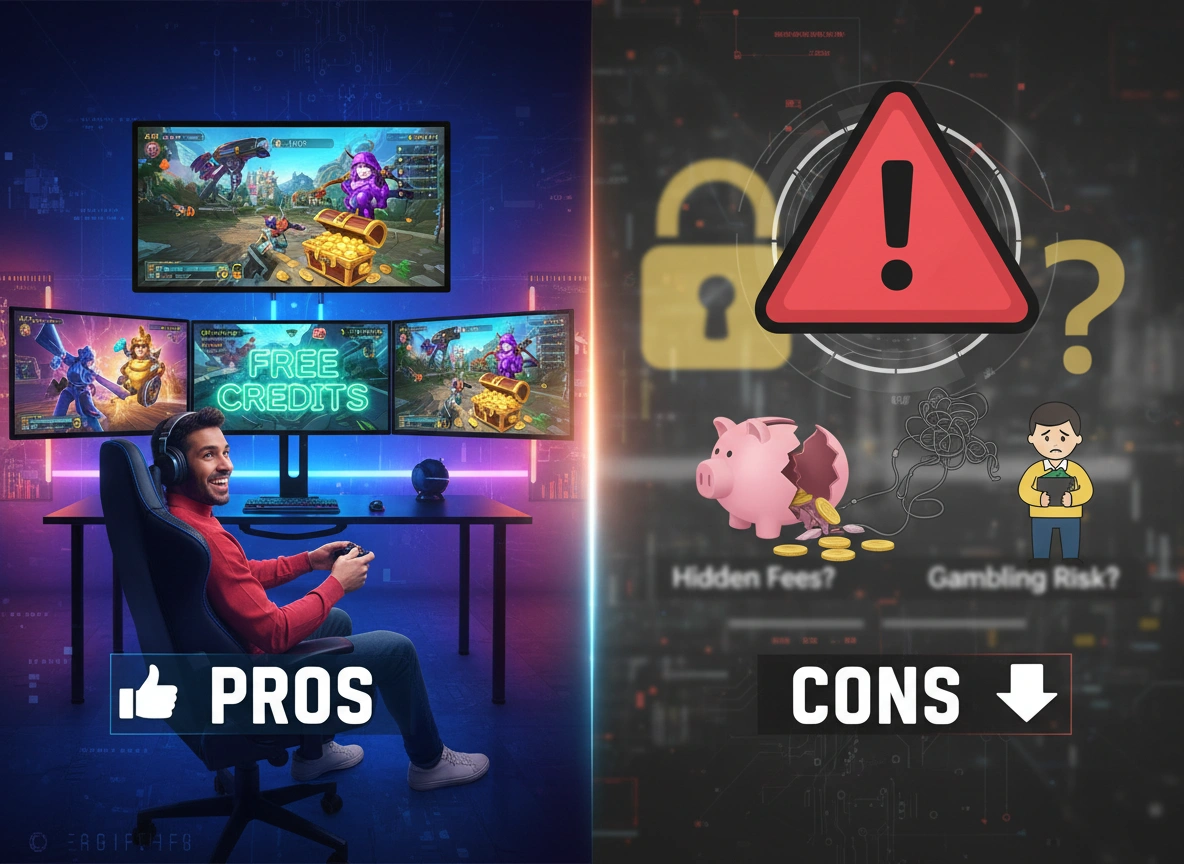
The online gaming industry is booming. Analysts project the global market will exceed $321 billion by 2026. Within this massive ecosystem, especially in the realms of social casinos and mobile gaming, “free credit links” have become a ubiquitous marketing tool. Players scour the internet daily for these digital keys, hoping to extend their playtime without opening their wallets.
But are these links truly free? Like many promotional strategies, they come with a complex mix of benefits and potential pitfalls. Whether you are a casual player enjoying a quick spin on a slot app or a dedicated gamer looking to maximize resources, understanding the mechanics behind these offers is essential.
This article explores the landscape of free credit links, breaking down exactly what they offer, why they are so popular, and the hidden risks that every player should know.
Understanding Free Credit Links
Before weighing the pros and cons, we must define what we are talking about. Free credit links—often called “freebies,” “daily bonuses,” or “promo links”—are unique URLs generated by game developers or affiliate marketers. When a player clicks one, the game app launches, and a specific amount of in-game currency (credits, coins, spins, or chips) is automatically deposited into their account.
These are most common in:
- Social Casinos: Games like Coin Master, Slotomania, or Doubledown Casino.
- Mobile RPGs: Games that require energy or currency to progress.
- Gacha Games: Titles where currency is used to summon characters.
Now, let’s dive into the balanced reality of using these resources.
The Advantages: Why Players Love Them
The popularity of free credit links isn’t a mystery. They offer tangible value to the player experience, often serving as a lifeline when resources run dry.
1. Extended Gameplay Without Cost
The most obvious benefit is financial. Mobile gaming monetization is often aggressive, relying on “pain points” where a player runs out of resources and must either wait or pay. Free credit links bridge this gap.
For a player who refuses to spend real money (F2P or Free-to-Play), these links are vital. They allow for an extra 20 minutes of play, a few more spins on a slot, or one more attempt at a difficult level. This accessibility keeps the game inclusive for those on a budget.
2. Risk-Free Trial of Features
Many games lock premium features behind currency walls. A player might hesitate to spend their hard-earned accumulation of coins on a high-stakes bet or a new game mode.
Free credits act as “house money.” Since the player didn’t purchase them or grind hours for them, they feel psychologically freer to take risks. This allows players to explore aspects of the game they might otherwise ignore due to resource scarcity.
3. Community Building and Engagement
Interestingly, free credit links often serve as the glue for gaming communities. Developers frequently distribute these links via social media channels like Facebook, Twitter, and Instagram.
This strategy forces players to congregate on these platforms to find the daily links.
- Facebook Groups: Dedicated groups for sharing links often have tens of thousands of members.
- Forums: Players discuss strategies while hunting for the latest promo codes.
This shared pursuit fosters a sense of camaraderie. Players help each other find active links, share tips on expiration times, and celebrate big wins achieved through free credits.
4. Developer Incentives and Loyalty
From the industry side, these links are a powerful retention tool. A study on mobile app retention suggests that apps offering daily rewards see significantly higher login rates than those that don’t.
By giving away a small amount of currency, developers build a habit. The player thinks, “I’ll just log in to click the link and grab my coins.” Once the app is open, the likelihood of them playing for an hour increases dramatically. It is a mutually beneficial loop: the player gets free resources, and the developer gets daily active users (DAU).
The Disadvantages: The Hidden Costs
While the word “free” is enticing, the digital economy rarely gives something for nothing. There are security risks, psychological traps, and gameplay imbalances associated with relying too heavily on these links.
1. Security and Malware Risks
This is the most significant danger. While official links from the game developer are safe, the demand for free credits has spawned a shadow industry of third-party “generators” and scam sites.
Cybercriminals know players are desperate for resources. They create fake websites promising “Unlimited Free Credits” or “10,000 Free Spins.”
- Phishing: These sites often require users to log in with their game credentials or Facebook account, leading to account theft.
- Malware: Clicking on unverified links can trigger drive-by downloads of malware or adware onto a user’s device.
- Data Harvesting: Some “freebie” apps request invasive permissions on your phone, harvesting contact lists and location data in exchange for a few virtual coins.
2. The “Freemium” Psychological Trap
Behavioral economists have long studied the power of “free.” When we receive something for free, we often feel a subconscious debt or a need to reciprocate.
In gaming, this manifests as the “Sunk Cost Fallacy” or “Reciprocity Effect.”
After collecting free credits for weeks, a player feels invested in the game. When those free credits eventually run out during a critical moment, the psychological barrier to spending real money is lower. The player rationalizes, “I’ve gotten so much for free, spending $5 now isn’t a big deal.”
Developers design these economies carefully. The free credits are rarely enough to achieve significant progress; they are just enough to give a taste of success, triggering the dopamine rush that leads to real spending later.
3. Algorithmic Impact and “Shadow Banning”
While less common, some game developers track the source of a player’s economy. If an account relies almost exclusively on promo codes and external links without engaging in other game behaviors (like watching ads or participating in events), algorithms may flag the account.
In extreme cases, this can lead to:
- Reduced Luck: Some anecdotal evidence from gaming communities suggests that “freeloaders” may receive lower drop rates or worse odds in RNG (Random Number Generator) mechanics.
- Shadow Bans: The account remains active, but is excluded from certain events or leaderboards to prioritize paying customers.
4. The Nuisance of Ad-Gateways
Legitimate third-party aggregator sites collect free links from various sources to make it easier for players. However, these sites need to make money too.
Often, clicking a “Free Credit” link on these aggregator sites forces the user through a gauntlet of advertising.
- Pop-up windows that are difficult to close.
- Redirects to shady app stores.
- Requirements to complete surveys before accessing the link.
The time and frustration spent navigating these ad-gateways can sometimes outweigh the value of the virtual currency received.
Best Practices for Safe Usage
If you decide that the pros outweigh the cons, you should approach free credit links with a strategy centered on digital hygiene and skepticism.
Stick to Official Sources
The safest links always come directly from the developer’s verified social media pages. Look for the blue checkmark on Facebook, Twitter, or Instagram. If a link is posted by a random user in a comment section claiming to offer “10x the normal amount,” ignore it. It is likely a scam.
Check the URL Structure
Before clicking, hover over the link (on desktop) or long-press it (on mobile) to see the destination.
- Safe: Links that start with the official game domain (e.g.,
https://examplegame.com/gift...). - Suspicious: Shortened links (bit.ly, tinyurl) posted by unknown sources, or domains that look slightly off (e.g.,
https://example-game-free-coins.net).
Never Share Personal Information
A legitimate free credit link will never ask for your password, email login, or credit card information. It should simply open the app and deposit the currency. If a site asks you to complete a “human verification” survey that involves downloading other apps or entering personal data, close the tab immediately.
Manage Your Expectations
Understand that free credits are a supplement, not a salary. They are designed to provide a small boost, not to sustain endless gameplay. If you find yourself spending hours hunting for links just to play for five minutes, the value exchange is no longer in your favor.
Conclusion
Free credit links are a double-edged sword in the world of online gaming. On one side, they democratize gaming, allowing players to enjoy premium experiences without financial barriers and fostering vibrant communities. They are a generous nod from developers that keeps the player base active and engaged.
On the other side, they are a vector for security risks and a psychological lever used to encourage eventual spending. The line between a helpful bonus and a digital trap is often thin.
For the savvy gamer, the verdict is positive—provided you stay vigilant. By sticking to official channels, protecting your data, and understanding the marketing mechanics at play, you can enjoy the free boosts without falling victim to the cons. Treat free credits as a fun bonus rather than a necessity, and you will keep the game enjoyable, safe, and truly free.
